
Show electrical workers how one technician's errors on 13,800-volt switchgear caused severe arc flash burns, and which precautions could have stopped it.

This powerful and sobering program tells the true story of Mark Standifer, who suffered catastrophic injuries when he was engulfed in an arc flash while working on high-voltage electrical equipment. Mark received second and third-degree burns over 40% of his body when he made several critical safety errors while installing relays on a 13,800-volt switchgear at a wastewater treatment plant. Through Mark's personal testimony, reenactments, and expert analysis, viewers witness the tragic consequences of failing to follow proper electrical safety procedures. The program identifies the specific mistakes Mark made, including failing to properly assess all hazards, not using appropriate lockout/tagout procedures, and lacking adequate personal protective equipment for arc flash protection. Participants will learn the vital importance of understanding all hazards associated with electrical work, the devastating power of arc flash incidents, proper risk assessment and job planning procedures, and the critical safety precautions that must never be skipped. This emotionally impactful training serves as a stark reminder that electrical work demands absolute commitment to safety protocols, and that shortcuts can result in injuries that affect workers and their families for the rest of their lives.
Arc flash awareness training is for electricians, maintenance technicians, plant operators and supervisors. These workers operate on or near energized switchgear, panels and motor control centers. Utility and wastewater plant crews are a natural fit. The 12-minute English video uses Mark Standifer's true story to show what skipped precautions cost.
Arc flash protection in the US is driven by NFPA 70E, Standard for Electrical Safety in the Workplace. OSHA's electrical rules in 29 CFR 1910 Subpart S also apply. Key sections include 1910.333 for work practices, including lockout and tagging, and 1910.335 for protective equipment.
Mark Standifer was installing relays on the door of 13,800-volt switchgear at a wastewater treatment plant when an arc blast engulfed him. He suffered second- and third-degree burns over 40 percent of his body. His errors included missing hazards, skipping lockout/tagout and lacking arc-rated PPE.
An arc flash is an explosive release of energy that occurs when electric current jumps through the air between conductors or to ground. It produces intense heat, blinding light, a pressure blast, molten metal and flying debris. Arc flash burns can be severe or fatal without the worker ever touching the equipment.
The best way to prevent arc flash injuries is to put equipment in an electrically safe work condition before work begins. That means planning the job, assessing every hazard, locking and tagging out, and testing for absence of voltage. When energized work is justified, wear arc-rated PPE matched to the hazard.
Schedule a demo with one of our reps
Our extensive Learning Management System allows you to dispatch knowledge and required certificates to teams across your site portfolio.
Our platform caters to all learning styles and scenarios, ensuring effective knowledge retention.
Take control of the learning experience with our configurable class structure. Tailor the training journey to match your organizational needs.
Deliver targeted safety training regimens at every level, putting safety directly into the hands of your workforce.


Deliver more than 400 online safety courses as well as your own training with the SafetyAmp learning management system.
Easily enroll employees into training courses, whether they're in a classroom or taken online - then visualize training history and compliance across multiple locations.
SCORM-compatible
Library of 400+ courses from partner training providers
Create online training courses
Quickly view employee training history
Schedule classroom training sessions
Manage training renewals
Eliminate lost certificates
Built-in reports for training compliance

Other Courses

Build confidence for critical moments through clear Hot Work Safety: Welding, Cutting, and Brazing instruction on frequent hazards associated with welding, cutting, and brazing.

Make workplace requirements clearer. Get a practical overview of spaces using OSHA’s three-pillar criteria for bodily entry in Confined Spaces: Acceptable Entry Conditions.
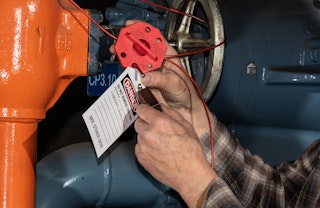
Give maintenance workers a clear six-step lockout/tagout routine, from identifying hazardous energy to verifying isolation before any work begins.


Made in the U.S.A.
© Copyright 2026