
Give maintenance workers a clear six-step lockout/tagout routine, from identifying hazardous energy to verifying isolation before any work begins.
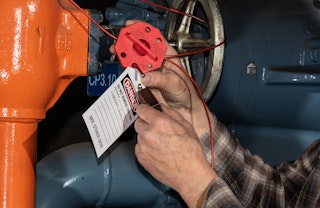
This essential safety training teaches workers the critical six-step lockout/tagout (LOTO) procedure required by OSHA to protect employees from the unexpected startup of machinery or release of hazardous energy during service and maintenance operations. Following these steps prevents serious injuries and fatalities from electrocution, caught-in hazards, crushing injuries, and amputations. The program breaks down the complete LOTO process into six mandatory steps: (1) Preparation—identifying energy sources and notifying affected employees, (2) Shutdown—properly shutting down equipment using normal stopping procedures, (3) Isolation—disconnecting or isolating all energy sources including electrical, mechanical, hydraulic, pneumatic, chemical, and thermal, (4) Lockout/Tagout—applying lockout devices and danger tags to isolated energy sources, (5) Stored Energy Check—releasing or restraining residual or stored energy such as capacitors, springs, elevated machine parts, and pressurized lines, and (6) Isolation Verification—testing to confirm that equipment cannot start and all energy is effectively isolated before beginning work. Topics include identifying all energy sources that require control, selecting and applying appropriate lockout devices and tags, using personal locks to ensure only the worker who installed the lock can remove it, conducting verification tests to prove zero energy state, procedures for group lockout when multiple workers are involved, and safe restoration of energy after work is completed. This training emphasizes that shortcuts in the six-step LOTO procedure can result in tragic consequences and that full compliance with each step is mandatory before servicing equipment.
Under OSHA, lockout/tagout training is required for authorized employees who lock out equipment and for affected employees who operate or work near it. Other employees whose work areas may be affected by energy control must at least understand the procedure and why they must not restart locked or tagged equipment.
OSHA's lockout/tagout standard is 29 CFR 1910.147, The Control of Hazardous Energy. It applies to servicing and maintenance on machines and equipment in general industry where unexpected startup or released energy could injure workers. It requires written energy control procedures, employee training and periodic inspections of those procedures.
The six steps of lockout/tagout are preparation, shutdown, isolation, applying lockout or tagout devices, checking for stored energy, and verifying isolation. Together they make sure every hazardous energy source is identified, disconnected, secured and confirmed dead before anyone services the machine. This short video runs about 5 minutes, with Spanish and French captions.
Lockout uses a physical lock to hold an energy-isolating device in the safe position, so only the person who applied it can remove it. Tagout uses a warning tag that identifies who applied it. Under OSHA, tagout alone is acceptable only when equipment cannot accept a lock or the tagout program gives equivalent protection.
OSHA requires lockout/tagout retraining when job duties, machines, processes or energy control procedures change, or when a new hazard appears. Retraining is also required when a periodic inspection reveals gaps in an employee's knowledge or use of procedures. Employers must inspect energy control procedures at least annually.
Schedule a demo with one of our reps
Our extensive Learning Management System allows you to dispatch knowledge and required certificates to teams across your site portfolio.
Our platform caters to all learning styles and scenarios, ensuring effective knowledge retention.
Take control of the learning experience with our configurable class structure. Tailor the training journey to match your organizational needs.
Deliver targeted safety training regimens at every level, putting safety directly into the hands of your workforce.


Deliver more than 400 online safety courses as well as your own training with the SafetyAmp learning management system.
Easily enroll employees into training courses, whether they're in a classroom or taken online - then visualize training history and compliance across multiple locations.
SCORM-compatible
Library of 400+ courses from partner training providers
Create online training courses
Quickly view employee training history
Schedule classroom training sessions
Manage training renewals
Eliminate lost certificates
Built-in reports for training compliance

Other Courses

Build confidence for critical moments through clear Hot Work Safety: Welding, Cutting, and Brazing instruction on frequent hazards associated with welding, cutting, and brazing.

Make workplace requirements clearer. Get a practical overview of spaces using OSHA’s three-pillar criteria for bodily entry in Confined Spaces: Acceptable Entry Conditions.
Give maintenance workers a clear six-step lockout/tagout routine, from identifying hazardous energy to verifying isolation before any work begins.


Made in the U.S.A.
© Copyright 2026