
Help truck and bus drivers match speed to town streets, work zones, weather and unfamiliar roads to prevent crashes and costly speeding tickets.
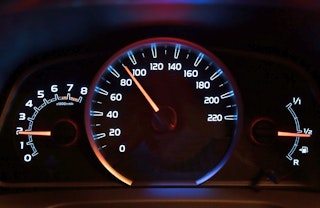
Speed is one of the few crash factors a professional driver controls completely. Heavy trucks and buses need more distance to stop, so driving too fast for conditions turns small mistakes into serious crashes. This program is for commercial truck and bus drivers, and for the fleets that depend on their safety records. The course treats speed control as a core defensive driving skill. It starts with speeding tickets and their consequences, then walks through situations that demand slower, more deliberate driving. These include driving through towns, approaching and passing through construction zones, handling changing weather and navigating roads the driver does not know. The goal is steady speed awareness that lowers risk on every trip. The video runs about 13 minutes in English. It was produced in 2010, so pair it with your company's current speed and fleet policies.
Commercial truck and bus drivers need speed management training, along with delivery drivers and fleet supervisors who set schedules. Speed control matters most in town, in construction zones, in bad weather and on unfamiliar roads. The 13-minute English video addresses each of these conditions, plus the cost of speeding tickets.
Several federal motor carrier rules address speed. 49 CFR 392.6 bars carriers from scheduling runs that would require speeding. 49 CFR 392.14 requires extreme caution and reduced speed in hazardous conditions such as fog, snow or ice. Under 49 CFR 383.51, excessive speeding counts as a serious traffic violation for CDL holders.
Speeding sharply increases truck stopping distance because braking distance grows with the square of speed. Doubling speed roughly quadruples the distance needed to brake. For a heavy truck, a few extra miles per hour can mean the difference between stopping safely and striking slowed traffic ahead.
Truck drivers should slow to the posted work-zone limit well before entering a construction zone. Expect lane shifts, narrow lanes, sudden stops and workers near the road. Increase following distance and avoid lane changes inside the zone. Many states increase fines for speeding in active work zones.
Truck drivers should slow down in bad weather enough to keep full control and adequate stopping distance. A common guideline is to cut speed by about one-third on wet roads and by half or more on packed snow. On ice, drivers should slow to a crawl or stop somewhere safe.
Schedule a demo with one of our reps
Our extensive Learning Management System allows you to dispatch knowledge and required certificates to teams across your site portfolio.
Our platform caters to all learning styles and scenarios, ensuring effective knowledge retention.
Take control of the learning experience with our configurable class structure. Tailor the training journey to match your organizational needs.
Deliver targeted safety training regimens at every level, putting safety directly into the hands of your workforce.


Deliver more than 400 online safety courses as well as your own training with the SafetyAmp learning management system.
Easily enroll employees into training courses, whether they're in a classroom or taken online - then visualize training history and compliance across multiple locations.
SCORM-compatible
Library of 400+ courses from partner training providers
Create online training courses
Quickly view employee training history
Schedule classroom training sessions
Manage training renewals
Eliminate lost certificates
Built-in reports for training compliance

Other Courses

Build confidence for critical moments through clear Hot Work Safety: Welding, Cutting, and Brazing instruction on frequent hazards associated with welding, cutting, and brazing.

Make workplace requirements clearer. Get a practical overview of spaces using OSHA’s three-pillar criteria for bodily entry in Confined Spaces: Acceptable Entry Conditions.

Give maintenance workers a clear six-step lockout/tagout routine, from identifying hazardous energy to verifying isolation before any work begins.


Made in the U.S.A.
© Copyright 2026