
Prepare healthcare workers to choose, don and doff the right PPE ensemble when treating contaminated patients during a mass casualty event.
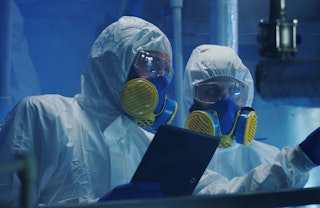
Self Protection Training VideoIt describes how to select the proper type of Personal Protective Equipment (PPE) to use during a mass casualty situation in order to protect healthcare workers from exposure to contaminated patients. It explains about the different choices in PPE and the issues involved in selecting the correct ensemble.Topics covered include:How exposure occursUsing respiratory protectionProper donning and doffing of PPEStandards for protective clothingEPA levels of protectionAvoiding heat injury while using PPE
Hospital first receivers, emergency department staff, decontamination teams and EMS personnel need self protection PPE training for mass casualty events. These workers may treat patients contaminated with hazardous agents. The 29-minute English video covers exposure routes, respirators, donning and doffing, protective clothing standards and EPA protection levels.
Hospital first receivers fall under OSHA's PPE standard (29 CFR 1910.132) and respiratory protection standard (29 CFR 1910.134). Hospitals that receive contaminated patients during an emergency are also subject to the emergency response provisions of HAZWOPER, 29 CFR 1910.120(q). Training should match each worker's role.
The EPA levels of protection range from Level A to Level D. Level A is a fully encapsulating vapor-tight suit with SCBA. Level B pairs SCBA with splash-resistant clothing. Level C uses an air-purifying respirator and chemical-resistant clothing. Level D is a standard work uniform with minimal protection.
The safest way to remove contaminated PPE is to follow a set doffing sequence, ideally with a trained observer. Remove the most contaminated items first and avoid touching skin with outer surfaces. Clean hands after removing gloves. Rushed or careless doffing is a common way responders contaminate themselves.
Workers in chemical protective suits avoid heat illness by limiting suit time, resting in cool areas on a schedule, and drinking water often. Supervisors should watch for dizziness, headache, confusion and heavy sweating. Impermeable suits trap body heat, so heat stress can develop quickly even indoors.
Schedule a demo with one of our reps
Our extensive Learning Management System allows you to dispatch knowledge and required certificates to teams across your site portfolio.
Our platform caters to all learning styles and scenarios, ensuring effective knowledge retention.
Take control of the learning experience with our configurable class structure. Tailor the training journey to match your organizational needs.
Deliver targeted safety training regimens at every level, putting safety directly into the hands of your workforce.


Deliver more than 400 online safety courses as well as your own training with the SafetyAmp learning management system.
Easily enroll employees into training courses, whether they're in a classroom or taken online - then visualize training history and compliance across multiple locations.
SCORM-compatible
Library of 400+ courses from partner training providers
Create online training courses
Quickly view employee training history
Schedule classroom training sessions
Manage training renewals
Eliminate lost certificates
Built-in reports for training compliance

Other Courses
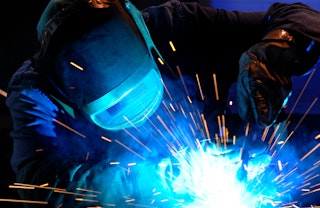
Build confidence for critical moments through clear Hot Work Safety: Welding, Cutting, and Brazing instruction on frequent hazards associated with welding, cutting, and brazing.

Make workplace requirements clearer. Get a practical overview of spaces using OSHA’s three-pillar criteria for bodily entry in Confined Spaces: Acceptable Entry Conditions.
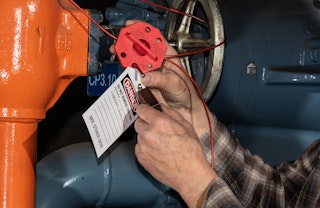
Give maintenance workers a clear six-step lockout/tagout routine, from identifying hazardous energy to verifying isolation before any work begins.


Made in the U.S.A.
© Copyright 2026