
Prepare scissor lift operators to inspect equipment, run pre-start checks and avoid the unsafe habits behind most falls from elevated platforms.
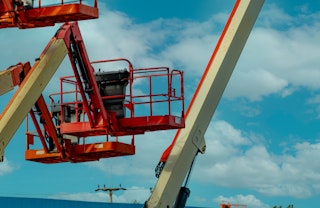
Falls from height are a leading cause of death for construction workers, and scissor lifts contribute to that toll. Most platform falls trace back to an unsafe act: leaving gate chains unhooked, propping the gate open, or climbing on or leaning over guardrails. This course is for scissor lift operators, their supervisors and crews who work from aerial platforms. The program starts with scaffolding basics, since OSHA treats scissor lifts as a type of mobile scaffold. It then reviews common causes of scissor lift injuries and how to prevent them. Operators learn basic controls and handling, how to inspect a lift, and which pre-start safety checks to complete before use. The final section covers safe start-up and operating practices. The video runs about 10 minutes in English. Because it was produced in 2009, pair it with current manufacturer manuals and site rules.
Scissor lift safety training is for anyone who operates or works from a scissor lift. That includes construction crews, electricians, painters, warehouse staff, and maintenance technicians. Supervisors who plan elevated work also benefit. The 10-minute video, available in English, covers inspection, pre-start checks, start-up, and safe operation.
OSHA treats scissor lifts as mobile scaffolds, so on construction sites they fall under 29 CFR 1926 Subpart L. Under 29 CFR 1926.454, each worker on a scaffold must be trained by a qualified person. Training must cover fall hazards, electrical hazards, falling objects, and safe use of the equipment.
Most scissor lift falls trace back to worker actions rather than equipment failure. Typical examples are an unlatched entry chain, a gate propped open, or a worker standing on or leaning over the guardrail to extend reach. Keeping the gate closed and both feet on the platform floor prevents most of these falls.
A scissor lift pre-start inspection should check the guardrails, gate, and chains, tires, hydraulic hoses for leaks, and battery or fuel level. Test the emergency stop, emergency lowering, and tilt alarm. Before raising the platform, survey the area for holes, slopes, and overhead power lines.
OSHA generally does not require a fall arrest harness in a scissor lift with a complete, intact guardrail system. The guardrails provide the fall protection. Some manufacturers and employers still require a restraint lanyard. Always follow the operator's manual and your site's rules.
Schedule a demo with one of our reps
Our extensive Learning Management System allows you to dispatch knowledge and required certificates to teams across your site portfolio.
Our platform caters to all learning styles and scenarios, ensuring effective knowledge retention.
Take control of the learning experience with our configurable class structure. Tailor the training journey to match your organizational needs.
Deliver targeted safety training regimens at every level, putting safety directly into the hands of your workforce.


Deliver more than 400 online safety courses as well as your own training with the SafetyAmp learning management system.
Easily enroll employees into training courses, whether they're in a classroom or taken online - then visualize training history and compliance across multiple locations.
SCORM-compatible
Library of 400+ courses from partner training providers
Create online training courses
Quickly view employee training history
Schedule classroom training sessions
Manage training renewals
Eliminate lost certificates
Built-in reports for training compliance

Other Courses

Build confidence for critical moments through clear Hot Work Safety: Welding, Cutting, and Brazing instruction on frequent hazards associated with welding, cutting, and brazing.

Make workplace requirements clearer. Get a practical overview of spaces using OSHA’s three-pillar criteria for bodily entry in Confined Spaces: Acceptable Entry Conditions.

Give maintenance workers a clear six-step lockout/tagout routine, from identifying hazardous energy to verifying isolation before any work begins.


Made in the U.S.A.
© Copyright 2026