
Give workers in any role a broad grounding in OSHA's Focus Four and most-cited hazards, PPE, fire prevention, first aid and bloodborne pathogens.

Workers will learn OSHA's Focus Four Hazards & Top 10 violations, protect yourself, prevent fires, respond to emergencies, and avoid pathogens through this essential workplace safety training program. Participants gain critical knowledge for workers, supervisors, and safety professionals who must ensure workplace safety and safety compliance in various work environments. The program covers essential workplace safety protocols, procedures, and comprehensive safety measures that prevent workplace accidents and ensure worker protection during workplace operations and maintenance activities in various workplace environments. Participants will learn about workplace safety requirements, safety procedures, and comprehensive protocols that ensure worker protection and regulatory compliance in workplace environments. The training emphasizes the importance of proper workplace safety procedures, safety measures, and comprehensive safety programs that prevent workplace accidents and ensure worker safety in workplace environments. Through detailed instruction on workplace safety protocols, safety procedures, and hazard prevention strategies, participants will develop the skills necessary to implement effective workplace safety programs that meet OSHA standards and ensure worker protection and workplace safety in workplace operations.
OSHA Top 10 safety training is a broad introduction for laborers, machine operators, technicians, supervisors and new safety officers. It suits new hires in manufacturing, construction and general industry who need a foundation across many hazards. The 33-minute video is in English with Spanish and French closed captions.
OSHA publishes its Top 10 most frequently cited standards each year, and the order shifts. Fall protection in construction, 29 CFR 1926.501, has held the top spot for more than a decade. Other regulars include hazard communication, ladders, scaffolding, respiratory protection, lockout/tagout, powered industrial trucks and machine guarding.
OSHA's Focus Four hazards are falls, struck-by, caught-in or -between, and electrocution. Together they cause most construction worker deaths. Knowing the Focus Four helps workers recognize the conditions behind many fatal incidents. Examples include unprotected edges, moving equipment, trench collapses and contact with power lines.
No. OSHA Top 10 training is an awareness course on frequently cited standards and common hazards. The OSHA 10-hour card comes only from OSHA's Outreach Training Program, taught by an authorized trainer. Awareness courses provide useful background but do not earn an Outreach card.
OSHA safety training frequency depends on the standard; there is no single annual rule. Bloodborne pathogens (1910.1030) and respiratory protection (1910.134) training must be repeated annually. Forklift operators need a performance evaluation at least every three years. Many other standards require retraining when hazards, equipment or procedures change.
Schedule a demo with one of our reps
Our extensive Learning Management System allows you to dispatch knowledge and required certificates to teams across your site portfolio.
Our platform caters to all learning styles and scenarios, ensuring effective knowledge retention.
Take control of the learning experience with our configurable class structure. Tailor the training journey to match your organizational needs.
Deliver targeted safety training regimens at every level, putting safety directly into the hands of your workforce.


Deliver more than 400 online safety courses as well as your own training with the SafetyAmp learning management system.
Easily enroll employees into training courses, whether they're in a classroom or taken online - then visualize training history and compliance across multiple locations.
SCORM-compatible
Library of 400+ courses from partner training providers
Create online training courses
Quickly view employee training history
Schedule classroom training sessions
Manage training renewals
Eliminate lost certificates
Built-in reports for training compliance

Other Courses

Build confidence for critical moments through clear Hot Work Safety: Welding, Cutting, and Brazing instruction on frequent hazards associated with welding, cutting, and brazing.

Make workplace requirements clearer. Get a practical overview of spaces using OSHA’s three-pillar criteria for bodily entry in Confined Spaces: Acceptable Entry Conditions.
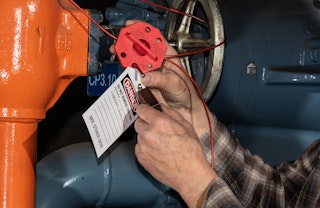
Give maintenance workers a clear six-step lockout/tagout routine, from identifying hazardous energy to verifying isolation before any work begins.


Made in the U.S.A.
© Copyright 2026