
Train telehandler operators to inspect the machine, use attachments, lift, place and unload materials safely and stay aware of hazards around the site.
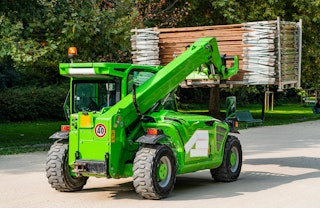
Learn expert guidance and best practices for safe and efficient telehandler operations through this essential heavy equipment safety training program. Participants gain critical knowledge for telehandler operators, construction workers, and safety supervisors who must ensure effective telehandler safety and successful equipment operations in various construction and industrial environments. The program covers essential telehandler safety protocols, operation procedures, and comprehensive equipment safety strategies that enhance telehandler safety effectiveness and ensure successful equipment operations in workplace environments. Participants will learn about telehandler safety requirements, operation procedures, and comprehensive protocols that ensure telehandler safety success and successful equipment operations in workplace environments. The training emphasizes the importance of proper telehandler safety procedures, operation techniques, and comprehensive telehandler safety programs that enhance safety effectiveness and ensure successful equipment operations in workplace environments. Through detailed instruction on telehandler safety protocols, equipment operation strategies, and safety techniques, participants will develop the skills necessary to implement effective telehandler safety programs that meet professional standards and ensure telehandler safety success and successful equipment operations in workplace environments.
Telehandler operator training is required for anyone who operates a telehandler, also called a telescopic handler, on construction sites, farms, warehouses, or industrial yards. Signal persons and ground crews working around the machine also benefit from knowing its capabilities, hand signals, and load limits. The 14-minute video is in English.
OSHA treats telehandlers as powered industrial trucks, so operator training falls under 29 CFR 1910.178(l) in general industry. In construction, 29 CFR 1926.602(d) applies the same training requirements. Operators must complete formal instruction, hands-on practice, and an evaluation of their performance before running the machine unsupervised.
Telehandler operators must have their performance evaluated at least once every three years under OSHA's powered industrial truck rules. Refresher training is also required after an accident, near miss, unsafe operation, or poor evaluation. A move to a different type of truck or a relevant workplace change also triggers it.
A telehandler pre-use inspection should check tires, hydraulic hoses and cylinders for leaks, the boom and forks or attachments for damage, and fluid levels. Operators should also test brakes, steering, controls, lights, horn, and backup alarm, and confirm the load chart is legible. Any defect means tagging the machine out until repaired.
Telehandlers usually tip over when the load exceeds what the load chart allows for that boom angle and extension. Rated capacity drops as the boom extends, so a load that is safe close in can tip the machine far out. Uneven ground, travel with a raised boom, and sharp turns also reduce telehandler stability.
Schedule a demo with one of our reps
Our extensive Learning Management System allows you to dispatch knowledge and required certificates to teams across your site portfolio.
Our platform caters to all learning styles and scenarios, ensuring effective knowledge retention.
Take control of the learning experience with our configurable class structure. Tailor the training journey to match your organizational needs.
Deliver targeted safety training regimens at every level, putting safety directly into the hands of your workforce.


Deliver more than 400 online safety courses as well as your own training with the SafetyAmp learning management system.
Easily enroll employees into training courses, whether they're in a classroom or taken online - then visualize training history and compliance across multiple locations.
SCORM-compatible
Library of 400+ courses from partner training providers
Create online training courses
Quickly view employee training history
Schedule classroom training sessions
Manage training renewals
Eliminate lost certificates
Built-in reports for training compliance

Other Courses

Build confidence for critical moments through clear Hot Work Safety: Welding, Cutting, and Brazing instruction on frequent hazards associated with welding, cutting, and brazing.

Make workplace requirements clearer. Get a practical overview of spaces using OSHA’s three-pillar criteria for bodily entry in Confined Spaces: Acceptable Entry Conditions.
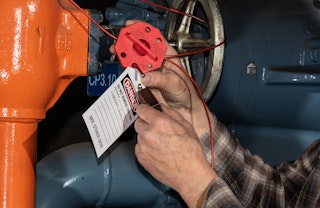
Give maintenance workers a clear six-step lockout/tagout routine, from identifying hazardous energy to verifying isolation before any work begins.


Made in the U.S.A.
© Copyright 2026