
Reduce workplace risk. Get a practical overview of MEWP types, operating hazards, and practical risk controls in MEWPs: Safe Operation of Scissor Lifts.
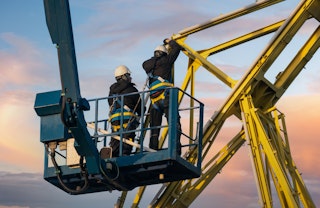
Designed for day-to-day use, MEWPs: Safe Operation of Scissor Lifts explains the topic in a clear and actionable way. Key outcomes include the ability to spot general expectations for scissor lifts, spot particular hazards and precautions, and summarize how to choose the right scissor lift. The material also helps learners explain maintenance and repair procedures. Practical examples connect the subject to routine tasks, expected procedures, and decisions employees may need to make on the job. Learners finish with a clearer understanding of what to look for, how to respond, and when to raise a concern or seek additional guidance.
Scissor lift safety training is for anyone who operates or rides a scissor lift. That includes construction workers, maintenance technicians, warehouse staff and other employees who work at height. Supervisors who select lifts and plan elevated work also benefit. The 9-minute video is in English, with Spanish and French closed captions.
OSHA treats scissor lifts as mobile scaffolds in construction, so 29 CFR 1926.451 and 1926.452(w) apply, with training required under 1926.454. Guardrails on open sides follow 1926.451(g) in construction or 1910.29 in general industry. ANSI A92 standards add design, inspection and safe-use requirements for scissor lifts.
OSHA does not require a formal certification card to operate a scissor lift. Employers must make sure only trained workers run scissor lifts, with training on hazards, fall protection, load limits and safe operation. Operators should also be familiar with the specific make and model they will use.
The most common scissor lift accidents are falls from the platform, tip-overs or collapses from poor stabilization, and crushing or electrocution from bad positioning. Guardrails prevent falls, while firm ground and balanced loads prevent tip-overs. Keeping at least 10 feet from power lines reduces electrocution risk.
Choose a scissor lift by matching its working height, platform size and load capacity to the job, and its power type to the location. Electric scissor lifts suit indoor work because they produce no emissions and have non-marking tires. Rough-terrain models with larger wheels handle uneven outdoor ground.
Schedule a demo with one of our reps
Our extensive Learning Management System allows you to dispatch knowledge and required certificates to teams across your site portfolio.
Our platform caters to all learning styles and scenarios, ensuring effective knowledge retention.
Take control of the learning experience with our configurable class structure. Tailor the training journey to match your organizational needs.
Deliver targeted safety training regimens at every level, putting safety directly into the hands of your workforce.


Deliver more than 400 online safety courses as well as your own training with the SafetyAmp learning management system.
Easily enroll employees into training courses, whether they're in a classroom or taken online - then visualize training history and compliance across multiple locations.
SCORM-compatible
Library of 400+ courses from partner training providers
Create online training courses
Quickly view employee training history
Schedule classroom training sessions
Manage training renewals
Eliminate lost certificates
Built-in reports for training compliance

Other Courses

Build confidence for critical moments through clear Hot Work Safety: Welding, Cutting, and Brazing instruction on frequent hazards associated with welding, cutting, and brazing.

Make workplace requirements clearer. Get a practical overview of spaces using OSHA’s three-pillar criteria for bodily entry in Confined Spaces: Acceptable Entry Conditions.

Give maintenance workers a clear six-step lockout/tagout routine, from identifying hazardous energy to verifying isolation before any work begins.


Made in the U.S.A.
© Copyright 2026