
Reduce workplace risk with Making Safety Work training focused on core workplace safety responsibilities and practical safe-work expectations.

Making Safety Work: Overview of Workplace Safety & Responsibilities gives learners a practical foundation for making safer, more informed decisions. Key outcomes include the ability to explain safety, describe clarify responsibilities, and show safe practices. The material also helps learners describe cultivate a safety culture. Practical examples connect the subject to routine tasks, expected procedures, and decisions employees may need to make on the job. Learners finish with a clearer understanding of what to look for, how to respond, and when to raise a concern or seek additional guidance.
A general workplace safety overview course suits new hires, temporary and seasonal workers, and experienced employees who need a broad refresher. It fits manufacturing, warehousing and maintenance settings where several hazards overlap. The 21-minute video, in English and Spanish, stresses each employee's role in making the safety program work.
A general safety orientation does not by itself meet OSHA's topic-specific training requirements. Standards such as lockout/tagout (29 CFR 1910.147), permit-required confined spaces (1910.146), hazard communication (1910.1200) and bloodborne pathogens (1910.1030) each require their own training. An overview works best as an introduction before that detailed instruction.
A workplace safety orientation should introduce the hazards employees are most likely to meet. The Making Safety Work video touches on lockout/tagout, personal protective equipment, bloodborne pathogens and confined space entry. It also covers hazard communication, good housekeeping and pedestrian safety, with basic controls for each.
Employee responsibilities for workplace safety include following safety rules and procedures, wearing required PPE and keeping work areas orderly. Workers should report hazards, injuries and near misses. Workers should also stop and ask when a task is unclear. Employers own the safety program, but it only works when each worker takes part.
Employee participation in a safety program grows when workers help identify hazards, join safety committees or inspections, and see their reports acted on quickly. Supervisors should model safe behavior and recognize good catches. Workers stop reporting when concerns vanish without a response, so close the loop every time.
Schedule a demo with one of our reps
Our extensive Learning Management System allows you to dispatch knowledge and required certificates to teams across your site portfolio.
Our platform caters to all learning styles and scenarios, ensuring effective knowledge retention.
Take control of the learning experience with our configurable class structure. Tailor the training journey to match your organizational needs.
Deliver targeted safety training regimens at every level, putting safety directly into the hands of your workforce.


Deliver more than 400 online safety courses as well as your own training with the SafetyAmp learning management system.
Easily enroll employees into training courses, whether they're in a classroom or taken online - then visualize training history and compliance across multiple locations.
SCORM-compatible
Library of 400+ courses from partner training providers
Create online training courses
Quickly view employee training history
Schedule classroom training sessions
Manage training renewals
Eliminate lost certificates
Built-in reports for training compliance

Other Courses

Build confidence for critical moments through clear Hot Work Safety: Welding, Cutting, and Brazing instruction on frequent hazards associated with welding, cutting, and brazing.

Make workplace requirements clearer. Get a practical overview of spaces using OSHA’s three-pillar criteria for bodily entry in Confined Spaces: Acceptable Entry Conditions.
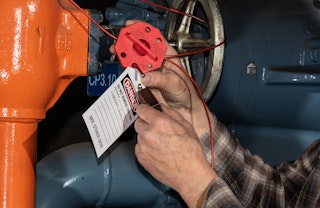
Give maintenance workers a clear six-step lockout/tagout routine, from identifying hazardous energy to verifying isolation before any work begins.


Made in the U.S.A.
© Copyright 2026