
Reduce workplace risk through clear Lockout Tagout: Secure Safely instruction on different types of energy and measures to prevent re-energization of machinery.
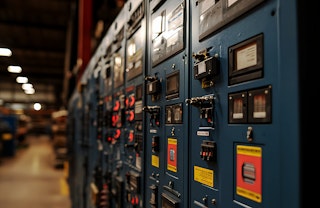
Focused on real-world application, Lockout Tagout: Secure Safely turns core concepts into clear actions learners can use at work. Key outcomes include the ability to explain different types of energy, spot measures to prevent re-energization of machinery, and summarize the difference between lockout and tagout. The material also helps learners explain the different types of personnel and their roles. Practical examples connect the subject to routine tasks, expected procedures, and decisions employees may need to make on the job. Learners finish with a clearer understanding of what to look for, how to respond, and when to raise a concern or seek additional guidance.
Lockout/tagout training is required for authorized employees who lock out equipment to service it. Affected employees who operate or work near that equipment must be trained too. All other workers in the area need awareness so they never remove a lock or restart tagged equipment. The 16-minute video is in English, with Spanish, French, Korean and Vietnamese closed captions.
Lockout/tagout is covered by OSHA 29 CFR 1910.147, the control of hazardous energy standard. The standard requires a written energy control program, equipment-specific procedures, employee training and a periodic inspection of each procedure at least once a year. Lockout is preferred, and tagout alone is used mainly when a device cannot accept a lock.
OSHA does not set a fixed calendar interval for lockout/tagout retraining. Retraining is required whenever job duties, machines, energy control procedures or hazards change. It is also required when an inspection or other evidence shows an employee's knowledge or use of procedures falls short. Many employers refresh training annually as a best practice.
Lockout is safer than tagout. A lockout device, such as a padlock, physically holds an energy-isolating device in the off position so equipment cannot be restarted. A tagout device is only a warning tag with no physical barrier. Tags must therefore be clear, durable and securely attached.
Lockout/tagout must control every hazardous energy source on a machine, including electrical, mechanical, hydraulic, pneumatic, chemical and thermal energy. Stored energy in springs, raised parts, capacitors and pressurized lines must be released or blocked. Moving parts must come to a full stop before work begins.
Schedule a demo with one of our reps
Our extensive Learning Management System allows you to dispatch knowledge and required certificates to teams across your site portfolio.
Our platform caters to all learning styles and scenarios, ensuring effective knowledge retention.
Take control of the learning experience with our configurable class structure. Tailor the training journey to match your organizational needs.
Deliver targeted safety training regimens at every level, putting safety directly into the hands of your workforce.


Deliver more than 400 online safety courses as well as your own training with the SafetyAmp learning management system.
Easily enroll employees into training courses, whether they're in a classroom or taken online - then visualize training history and compliance across multiple locations.
SCORM-compatible
Library of 400+ courses from partner training providers
Create online training courses
Quickly view employee training history
Schedule classroom training sessions
Manage training renewals
Eliminate lost certificates
Built-in reports for training compliance

Other Courses

Build confidence for critical moments through clear Hot Work Safety: Welding, Cutting, and Brazing instruction on frequent hazards associated with welding, cutting, and brazing.

Make workplace requirements clearer. Get a practical overview of spaces using OSHA’s three-pillar criteria for bodily entry in Confined Spaces: Acceptable Entry Conditions.
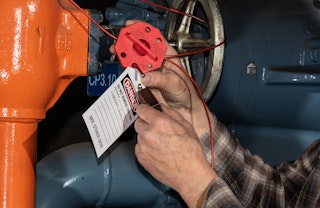
Give maintenance workers a clear six-step lockout/tagout routine, from identifying hazardous energy to verifying isolation before any work begins.


Made in the U.S.A.
© Copyright 2026