
Train caregivers to assess each transfer and use sound body mechanics when moving patients from chairs, protecting both their backs and patient dignity.

Learn safe and effective techniques for lifting patients from chairs and protect both patients and caregivers from injuries through this essential healthcare safety training program. Participants gain critical knowledge for healthcare workers, caregivers, and safety supervisors who must ensure effective patient lifting and successful healthcare safety in various healthcare environments. The program covers essential patient lifting protocols, safety procedures, and comprehensive healthcare safety strategies that enhance patient lifting effectiveness and ensure successful healthcare safety in healthcare environments. Participants will learn about patient lifting requirements, safety procedures, and comprehensive protocols that ensure patient lifting success and successful healthcare safety in healthcare environments. The training emphasizes the importance of proper patient lifting procedures, safety techniques, and comprehensive patient lifting programs that enhance safety effectiveness and ensure successful healthcare safety in healthcare environments. Through detailed instruction on patient lifting protocols, healthcare safety strategies, and safety techniques, participants will develop the skills necessary to implement effective patient lifting programs that meet professional standards and ensure patient lifting success and successful healthcare safety in healthcare environments.
Patient lifting training is designed for nurses, nursing assistants, home health aides, therapy staff, and other caregivers. They move people from chairs, beds, wheelchairs, or bathtubs. It also serves supervisors in hospitals, nursing homes, and assisted living facilities who set safe patient handling practices. The 35-minute video is in English.
No single federal OSHA standard requires safe patient handling training, though OSHA can cite serious lifting hazards under the General Duty Clause. Several states have safe patient handling laws for hospitals or other healthcare facilities. OSHA has also published ergonomics guidelines for nursing homes that recommend minimizing manual lifting of residents.
To safely lift a patient from a chair, first assess how much weight the person can bear and whether a mechanical lift is needed. Lock any wheels, explain each step, and keep the patient close. Bend at the knees, keep your back straight, avoid twisting, and get help whenever the transfer exceeds your capacity.
Caregiver back injuries are common because patients are heavy, unevenly shaped, and can shift or lose balance unexpectedly during a transfer. Caregivers often lift in tight spaces, bend over chairs or beds, and repeat transfers many times per shift. Poor body mechanics combined with these loads strain the spine and back muscles.
Before any patient transfer, a caregiver should check the patient's ability to stand and cooperate, their weight, medical restrictions, and any lines or tubes. Look at the space, equipment, and footing too. Because no two transfers are alike, this quick assessment determines the technique, the number of helpers, and whether lifting equipment is needed.
Schedule a demo with one of our reps
Our extensive Learning Management System allows you to dispatch knowledge and required certificates to teams across your site portfolio.
Our platform caters to all learning styles and scenarios, ensuring effective knowledge retention.
Take control of the learning experience with our configurable class structure. Tailor the training journey to match your organizational needs.
Deliver targeted safety training regimens at every level, putting safety directly into the hands of your workforce.


Deliver more than 400 online safety courses as well as your own training with the SafetyAmp learning management system.
Easily enroll employees into training courses, whether they're in a classroom or taken online - then visualize training history and compliance across multiple locations.
SCORM-compatible
Library of 400+ courses from partner training providers
Create online training courses
Quickly view employee training history
Schedule classroom training sessions
Manage training renewals
Eliminate lost certificates
Built-in reports for training compliance

Other Courses

Build confidence for critical moments through clear Hot Work Safety: Welding, Cutting, and Brazing instruction on frequent hazards associated with welding, cutting, and brazing.

Make workplace requirements clearer. Get a practical overview of spaces using OSHA’s three-pillar criteria for bodily entry in Confined Spaces: Acceptable Entry Conditions.
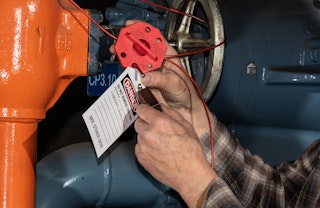
Give maintenance workers a clear six-step lockout/tagout routine, from identifying hazardous energy to verifying isolation before any work begins.


Made in the U.S.A.
© Copyright 2026