
Make workplace requirements clearer through clear HAZWOPER: NFPA HazMat Labeling Information instruction on NFPA HazMat labeling requirements.
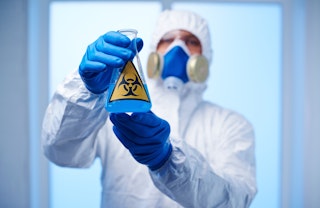
The HAZWOPER: NFPA HazMat Labeling Information program builds practical awareness and supports consistent workplace decisions. Key outcomes include the ability to describe NFPA HazMat labeling rules for safe handling, explain the value of correct HAZWOPER labeling, and apply NFPA label information to evaluate hazards. The material also helps learners ensure compliance with HazMat labeling standards. Practical examples connect the subject to routine tasks, expected procedures, and decisions employees may need to make on the job. Learners finish with a clearer understanding of what to look for, how to respond, and when to raise a concern or seek additional guidance.
NFPA 704 label training is for emergency responders, HAZWOPER team members, firefighters, and workers at facilities with chemical storage tanks or hazardous materials areas. Anyone who must judge hazards quickly from a building or tank placard benefits. The 7-minute video, in English, explains the fire diamond's colors, numbers, and special symbols.
The NFPA fire diamond uses four colored sections. Blue rates health hazards, red rates flammability, and yellow rates instability or reactivity. The white bottom section shows special hazards. Each colored section carries a number so responders can judge severity at a glance from a distance.
A 4 on an NFPA diamond means the most severe hazard level in that category, while 0 means minimal hazard. For example, a 4 in the red section indicates an extremely flammable material. That's the opposite of GHS hazard categories, where Category 1 is the most severe.
The white section of the NFPA diamond shows special hazards. A W with a line through it means the material reacts dangerously with water, OX means oxidizer, and SA means simple asphyxiant gas. These symbols warn responders away from tactics, such as applying water, that could make an incident worse.
NFPA 704 is a consensus standard, not an OSHA regulation, though many local fire codes require NFPA 704 placards on buildings and tanks. OSHA's Hazard Communication Standard, 29 CFR 1910.1200, allows NFPA ratings as workplace labels if employees still have immediate access to complete hazard information.
Schedule a demo with one of our reps
Our extensive Learning Management System allows you to dispatch knowledge and required certificates to teams across your site portfolio.
Our platform caters to all learning styles and scenarios, ensuring effective knowledge retention.
Take control of the learning experience with our configurable class structure. Tailor the training journey to match your organizational needs.
Deliver targeted safety training regimens at every level, putting safety directly into the hands of your workforce.


Deliver more than 400 online safety courses as well as your own training with the SafetyAmp learning management system.
Easily enroll employees into training courses, whether they're in a classroom or taken online - then visualize training history and compliance across multiple locations.
SCORM-compatible
Library of 400+ courses from partner training providers
Create online training courses
Quickly view employee training history
Schedule classroom training sessions
Manage training renewals
Eliminate lost certificates
Built-in reports for training compliance

Other Courses

Build confidence for critical moments through clear Hot Work Safety: Welding, Cutting, and Brazing instruction on frequent hazards associated with welding, cutting, and brazing.

Make workplace requirements clearer. Get a practical overview of spaces using OSHA’s three-pillar criteria for bodily entry in Confined Spaces: Acceptable Entry Conditions.

Give maintenance workers a clear six-step lockout/tagout routine, from identifying hazardous energy to verifying isolation before any work begins.


Made in the U.S.A.
© Copyright 2026