
Reduce workplace risk with Hazardous Materials training focused on Hazards are everywhere.
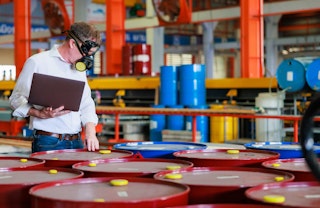
Hazardous Materials: Hazard Communication and Spill Containment gives learners a practical foundation for making safer, more informed decisions. Key outcomes include the ability to spot 9 GHS pictograms to instantly spot work environment chemical risks, describe navigate the 16-section Safety Data Sheet (SDS) for critical safety info, and select and apply correct PPE to prevent toxic exposure and injury. The material also helps learners describe execute the "Communicate, Contain, Clean" protocol during accidental spills. Practical examples connect the subject to routine tasks, expected procedures, and decisions employees may need to make on the job. Learners finish with a clearer understanding of what to look for, how to respond, and when to raise a concern or seek additional guidance.
Hazardous materials spill containment training suits anyone who works around chemicals. That includes warehouse associates, custodial staff, loading dock workers, maintenance crews, facilities managers and safety officers. Workers who store, move or use cleaners, solvents, acids or gas cylinders need to read labels and respond to leaks correctly.
The OSHA Hazard Communication Standard, 29 CFR 1910.1200, requires employers to train workers on chemical hazards, labels and Safety Data Sheets. Workers who respond to releases beyond small incidental spills fall under HAZWOPER, 29 CFR 1910.120, which has its own training rules. PPE selection is governed by 29 CFR 1910.132.
Chemical spill response follows three steps: Communicate, Contain and Clean. First, warn coworkers and report the release to a supervisor. Next, keep the liquid from spreading or reaching drains, if that can be done safely. Cleanup should be left to workers trained for that substance and wearing the right PPE.
First aid measures appear in Section 4 of the standardized 16-section Safety Data Sheet. Section 2 lists hazards, Section 5 covers firefighting, Section 6 covers accidental release measures, and Section 8 covers exposure controls and PPE. The 11-minute hazardous materials video is available in English, Spanish and French.
Chemical spill sites are split into three control zones. The Hot Zone, or exclusion zone, is where contamination exists or may exist. The Decontamination Zone is where people and equipment are cleaned on the way out. The Clean Zone, or support zone, stays free of contamination and holds command functions.
Schedule a demo with one of our reps
Our extensive Learning Management System allows you to dispatch knowledge and required certificates to teams across your site portfolio.
Our platform caters to all learning styles and scenarios, ensuring effective knowledge retention.
Take control of the learning experience with our configurable class structure. Tailor the training journey to match your organizational needs.
Deliver targeted safety training regimens at every level, putting safety directly into the hands of your workforce.


Deliver more than 400 online safety courses as well as your own training with the SafetyAmp learning management system.
Easily enroll employees into training courses, whether they're in a classroom or taken online - then visualize training history and compliance across multiple locations.
SCORM-compatible
Library of 400+ courses from partner training providers
Create online training courses
Quickly view employee training history
Schedule classroom training sessions
Manage training renewals
Eliminate lost certificates
Built-in reports for training compliance

Other Courses
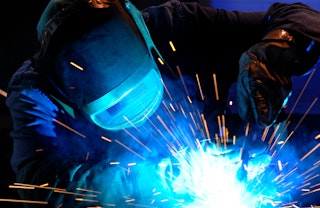
Build confidence for critical moments through clear Hot Work Safety: Welding, Cutting, and Brazing instruction on frequent hazards associated with welding, cutting, and brazing.

Make workplace requirements clearer. Get a practical overview of spaces using OSHA’s three-pillar criteria for bodily entry in Confined Spaces: Acceptable Entry Conditions.
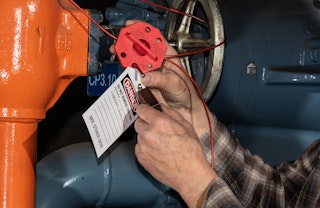
Give maintenance workers a clear six-step lockout/tagout routine, from identifying hazardous energy to verifying isolation before any work begins.


Made in the U.S.A.
© Copyright 2026