
Protect your team through clear Hazard Communication (Medical Healthcare) instruction on HazCom in medical settings.
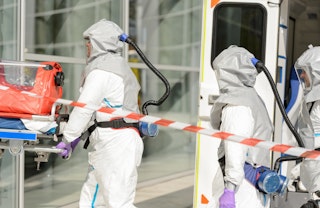
The Hazard Communication (Medical Healthcare) program builds practical awareness and supports consistent workplace decisions. Key outcomes include the ability to spot workplace hazards, interpret chemical labels and safety signs, and apply Safety Data Sheets (SDS) to find chemical safety information. The material also helps learners carry out applicable expectations and recommended practices. Practical examples connect the subject to routine tasks, expected procedures, and decisions employees may need to make on the job. Learners finish with a clearer understanding of what to look for, how to respond, and when to raise a concern or seek additional guidance.
Hazard communication training in healthcare is required for any employee who may be exposed to hazardous chemicals. That includes nurses, lab staff, pharmacy workers, sterile processing, housekeeping, and maintenance. Disinfectants, sterilants, and some medications all carry chemical hazards. The 16-minute video, in English, covers the written plan, labels, and Safety Data Sheets.
Hazard communication in hospitals is covered by OSHA's Hazard Communication Standard, 29 CFR 1910.1200. Healthcare employers must maintain a written program, a list of hazardous chemicals, labeled containers, and accessible Safety Data Sheets. They must also train employees on the chemical hazards in their work areas.
HazCom training is required when an employee first starts a job involving hazardous chemical exposure. It is also required whenever a new chemical hazard enters the work area. The standard doesn't set a fixed annual refresher, but many healthcare employers repeat HazCom training yearly to keep it current.
Common hazardous chemicals in hospitals include disinfectants, cleaners, and sterilants such as ethylene oxide and glutaraldehyde. Formaldehyde in labs and certain hazardous drugs, such as some chemotherapy agents, add to the list. Mercury, compressed gases, and anesthetic gases may also be present. Staff should know where to find each Safety Data Sheet.
A written hazard communication program must list the hazardous chemicals in the workplace. It must also explain how the facility handles labeling, Safety Data Sheets, and employee training. It must also describe how employees learn about hazards of non-routine tasks. In hospitals, the program should reach every department that stores or uses chemicals.
Schedule a demo with one of our reps
Our extensive Learning Management System allows you to dispatch knowledge and required certificates to teams across your site portfolio.
Our platform caters to all learning styles and scenarios, ensuring effective knowledge retention.
Take control of the learning experience with our configurable class structure. Tailor the training journey to match your organizational needs.
Deliver targeted safety training regimens at every level, putting safety directly into the hands of your workforce.


Deliver more than 400 online safety courses as well as your own training with the SafetyAmp learning management system.
Easily enroll employees into training courses, whether they're in a classroom or taken online - then visualize training history and compliance across multiple locations.
SCORM-compatible
Library of 400+ courses from partner training providers
Create online training courses
Quickly view employee training history
Schedule classroom training sessions
Manage training renewals
Eliminate lost certificates
Built-in reports for training compliance

Other Courses

Build confidence for critical moments through clear Hot Work Safety: Welding, Cutting, and Brazing instruction on frequent hazards associated with welding, cutting, and brazing.

Make workplace requirements clearer. Get a practical overview of spaces using OSHA’s three-pillar criteria for bodily entry in Confined Spaces: Acceptable Entry Conditions.

Give maintenance workers a clear six-step lockout/tagout routine, from identifying hazardous energy to verifying isolation before any work begins.


Made in the U.S.A.
© Copyright 2026