
Strengthen day-to-day performance with Handling Compressed Gas Safely (Public Agency) training focused on the safe handling of compressed gas by a public agency.
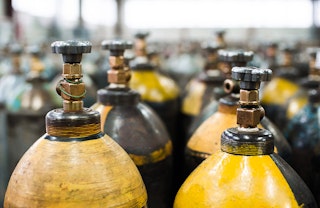
Handling Compressed Gas Safely (Public Agency) gives learners a practical foundation for making safer, more informed decisions. Key outcomes include the ability to describe the reason and essential concepts of handling compressed gas safely, spot common risks and responsibilities related to handling compressed gas safely, and use the training guidance during routine work. The material also helps learners respond appropriately when questions or unsafe conditions arise. Practical examples connect the subject to routine tasks, expected procedures, and decisions employees may need to make on the job. Learners finish with a clearer understanding of what to look for, how to respond, and when to raise a concern or seek additional guidance.
Any public agency employee who moves, connects, stores or works near gas cylinders needs compressed gas safety training. That includes maintenance and welding shop staff, water and wastewater operators, fleet mechanics, lab technicians and medical personnel. The 21-minute video is available in English.
OSHA's compressed gas rule, 29 CFR 1910.101, applies directly to private employers. State and local government workers are covered only in states with an OSHA-approved State Plan, which adopts equivalent rules. Where no plan applies, agencies can still use 1910.101 and Compressed Gas Association guidance as a sound baseline.
Compressed gas cylinders carry two kinds of hazards: stored pressure and the gas inside. A broken valve can turn a cylinder into a projectile. Depending on its contents, a leaking gas may burn, poison, corrode or feed a fire. A single gas can pose several of these dangers at once.
Compressed gas cylinders should be moved on a cylinder cart, strapped in place, with the valve closed and the protective cap on. Remove the regulator first. Never roll, drag or slide a cylinder, and never lift one by its cap or with a magnet. Short distances still call for a cart.
If a compressed gas cylinder is leaking, warn others, leave the area and follow your agency's emergency plan. Close the valve only if you can do so safely. For flammable gases, remove ignition sources if it is safe. Never try to repair a valve; trained responders should handle toxic or large leaks.
Schedule a demo with one of our reps
Our extensive Learning Management System allows you to dispatch knowledge and required certificates to teams across your site portfolio.
Our platform caters to all learning styles and scenarios, ensuring effective knowledge retention.
Take control of the learning experience with our configurable class structure. Tailor the training journey to match your organizational needs.
Deliver targeted safety training regimens at every level, putting safety directly into the hands of your workforce.


Deliver more than 400 online safety courses as well as your own training with the SafetyAmp learning management system.
Easily enroll employees into training courses, whether they're in a classroom or taken online - then visualize training history and compliance across multiple locations.
SCORM-compatible
Library of 400+ courses from partner training providers
Create online training courses
Quickly view employee training history
Schedule classroom training sessions
Manage training renewals
Eliminate lost certificates
Built-in reports for training compliance

Other Courses

Build confidence for critical moments through clear Hot Work Safety: Welding, Cutting, and Brazing instruction on frequent hazards associated with welding, cutting, and brazing.

Make workplace requirements clearer. Get a practical overview of spaces using OSHA’s three-pillar criteria for bodily entry in Confined Spaces: Acceptable Entry Conditions.
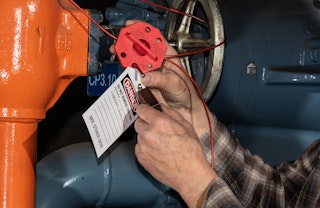
Give maintenance workers a clear six-step lockout/tagout routine, from identifying hazardous energy to verifying isolation before any work begins.


Made in the U.S.A.
© Copyright 2026