
Strengthen day-to-day performance with Flammables & Combustibles training focused on Stay informed about flammables and combustibles.
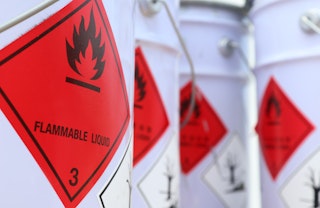
Flammables & Combustibles gives learners a practical foundation for making safer, more informed decisions. Key outcomes include the ability to describe the reason and essential concepts of flammables & combustibles, spot common risks and responsibilities related to flammables & combustibles, and use the training guidance during routine work. The material also helps learners respond appropriately when questions or unsafe conditions arise. Practical examples connect the subject to routine tasks, expected procedures, and decisions employees may need to make on the job. Learners finish with a clearer understanding of what to look for, how to respond, and when to raise a concern or seek additional guidance.
Flammable and combustible liquids training is needed by anyone who uses, stores, transfers or disposes of liquids such as gasoline, solvents, paints and aerosol products. That includes production, maintenance, warehouse and cleaning staff. Supervisors responsible for storage areas also need to understand flash points, vapor control and ignition sources.
OSHA's general industry standard 29 CFR 1910.106 covers the storage and handling of flammable liquids, and 29 CFR 1926.152 applies in construction. Training on the hazards of these liquids falls under the Hazard Communication Standard, 29 CFR 1910.1200, which also governs labels and safety data sheets.
The difference between flammable and combustible liquids is flash point, the lowest temperature at which a liquid gives off enough vapor to ignite. Under the long-used NFPA definition, flammable liquids flash below 100°F and combustible liquids at or above it. OSHA's current rules group most of them into flammable liquid Categories 1 through 4.
Flammable liquids should be stored in approved safety cans or containers, kept closed when not in use, and placed in flammable storage cabinets or designated storage rooms. OSHA limits a single cabinet to 60 gallons of Category 1, 2 or 3 liquids or 120 gallons of Category 4. Keep storage away from ignition sources and exits.
If a flammable liquid spills, eliminate ignition sources first, increase ventilation and keep people away from the vapors. Contain small spills with absorbents from a spill kit, and dispose of soaked materials in approved containers. For large spills or any fire, evacuate, raise the alarm and follow your emergency response plan.
Schedule a demo with one of our reps
Our extensive Learning Management System allows you to dispatch knowledge and required certificates to teams across your site portfolio.
Our platform caters to all learning styles and scenarios, ensuring effective knowledge retention.
Take control of the learning experience with our configurable class structure. Tailor the training journey to match your organizational needs.
Deliver targeted safety training regimens at every level, putting safety directly into the hands of your workforce.


Deliver more than 400 online safety courses as well as your own training with the SafetyAmp learning management system.
Easily enroll employees into training courses, whether they're in a classroom or taken online - then visualize training history and compliance across multiple locations.
SCORM-compatible
Library of 400+ courses from partner training providers
Create online training courses
Quickly view employee training history
Schedule classroom training sessions
Manage training renewals
Eliminate lost certificates
Built-in reports for training compliance

Other Courses

Build confidence for critical moments through clear Hot Work Safety: Welding, Cutting, and Brazing instruction on frequent hazards associated with welding, cutting, and brazing.

Make workplace requirements clearer. Get a practical overview of spaces using OSHA’s three-pillar criteria for bodily entry in Confined Spaces: Acceptable Entry Conditions.
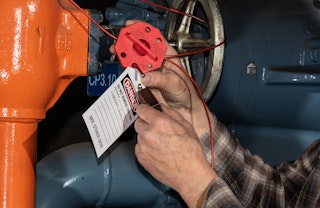
Give maintenance workers a clear six-step lockout/tagout routine, from identifying hazardous energy to verifying isolation before any work begins.


Made in the U.S.A.
© Copyright 2026