
Protect your team through clear Excavation, Trenching, and Shoring Safety in Construction instruction on causes of trench collapses and protective systems to prevent collapses.
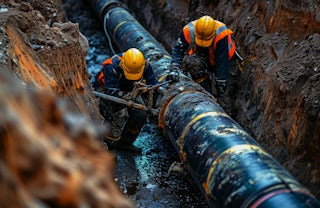
The Excavation, Trenching, and Shoring Safety in Construction program builds practical awareness and supports consistent workplace decisions. Key outcomes include the ability to spot causes of trench collapses, spot protective systems to prevent collapses, and summarize types of soil classification. The material also helps learners explain the role of the competent person on-site. Practical examples connect the subject to routine tasks, expected procedures, and decisions employees may need to make on the job. Learners finish with a clearer understanding of what to look for, how to respond, and when to raise a concern or seek additional guidance.
Excavation and trenching safety training is for construction laborers, equipment operators, utility and pipeline crews, and anyone who works in or near trenches. Supervisors and the designated competent person need it too, since they classify soil, choose protective systems, and inspect excavations before workers enter.
OSHA's excavation rules are in 29 CFR 1926 Subpart P, sections 1926.650 through 1926.652. Subpart P requires protective systems for trenches 5 feet deep or more unless the excavation is entirely in stable rock. Excavations deeper than 20 feet need a protective system designed by a registered professional engineer.
Trench cave-ins are prevented with protective systems: sloping or benching the walls back, shoring them with supports, or shielding workers inside a trench box. The competent person picks a system based on soil type, depth, water, cracking, and nearby loads such as roads or buildings. Spoil piles must stay at least 2 feet from the edge.
OSHA classifies excavation soil as stable rock, Type A, Type B, or Type C. Stable rock holds best, while Type C, such as granular or submerged soil, is the least stable and most dangerous. Soil classification determines how steeply trench walls can be sloped and which protective system will work.
A competent person in trenching can identify existing and predictable hazards and has the authority to correct them promptly. OSHA requires this person to inspect excavations daily before work begins and after rainstorms or other hazard-increasing events. The 15-minute video, available in English, Spanish and French, explains this role.
Schedule a demo with one of our reps
Our extensive Learning Management System allows you to dispatch knowledge and required certificates to teams across your site portfolio.
Our platform caters to all learning styles and scenarios, ensuring effective knowledge retention.
Take control of the learning experience with our configurable class structure. Tailor the training journey to match your organizational needs.
Deliver targeted safety training regimens at every level, putting safety directly into the hands of your workforce.


Deliver more than 400 online safety courses as well as your own training with the SafetyAmp learning management system.
Easily enroll employees into training courses, whether they're in a classroom or taken online - then visualize training history and compliance across multiple locations.
SCORM-compatible
Library of 400+ courses from partner training providers
Create online training courses
Quickly view employee training history
Schedule classroom training sessions
Manage training renewals
Eliminate lost certificates
Built-in reports for training compliance

Other Courses

Build confidence for critical moments through clear Hot Work Safety: Welding, Cutting, and Brazing instruction on frequent hazards associated with welding, cutting, and brazing.

Make workplace requirements clearer. Get a practical overview of spaces using OSHA’s three-pillar criteria for bodily entry in Confined Spaces: Acceptable Entry Conditions.

Give maintenance workers a clear six-step lockout/tagout routine, from identifying hazardous energy to verifying isolation before any work begins.


Made in the U.S.A.
© Copyright 2026