
Build confidence for critical moments. Get a practical overview of electrical safety skills in Electrical Safety for Qualified Workers.
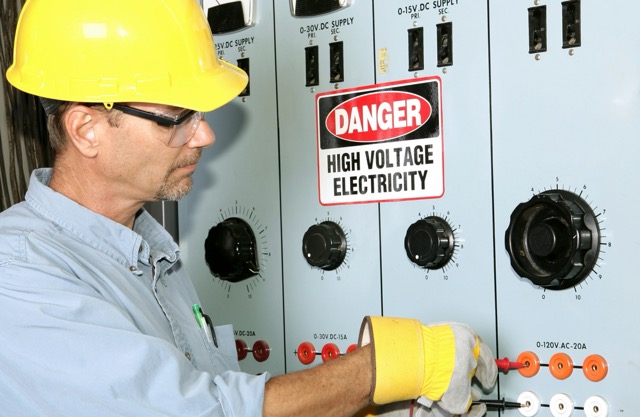
Designed for day-to-day use, Electrical Safety for Qualified Workers explains the topic in a clear and actionable way. Key outcomes include the ability to use safe electrical practices, spot electrical hazards, and use correct lockout/tagout procedures. The material also helps learners describe react effectively in emergencies. Practical examples connect the subject to routine tasks, expected procedures, and decisions employees may need to make on the job. Learners finish with a clearer understanding of what to look for, how to respond, and when to raise a concern or seek additional guidance.
Electrical safety training for qualified workers is needed by electricians, electrical maintenance technicians and others who work on or near exposed energized parts. A qualified person is trained in the equipment's construction, operation and hazards. The 20-minute English video covers approach boundaries, shock protection and arc flash PPE.
OSHA's electrical safety-related work practices in 29 CFR 1910.331 through 1910.335 set the legal requirements, including training under 1910.332. NFPA 70E, Standard for Electrical Safety in the Workplace, provides the detailed methods most employers follow. It covers shock and arc flash risk assessment, approach boundaries and PPE.
The limited approach boundary marks the distance from exposed energized parts where a shock hazard exists. Unqualified persons may cross it only with a qualified escort. The restricted approach boundary is closer, where shock risk rises sharply, and only qualified workers using proper shock protection may cross it.
NFPA 70E requires retraining for qualified electrical workers at intervals not exceeding three years. Earlier retraining is needed when supervision or annual inspections show unsafe practices. It is also needed for new technology or equipment, or when a worker must use unfamiliar procedures.
Energized electrical work is allowed when de-energizing would create a greater hazard or is infeasible because of equipment design or operational limits. Circuits under 50 volts may also stay energized if exposure does not increase. Otherwise, qualified workers must first create an electrically safe work condition.
Schedule a demo with one of our reps
Our extensive Learning Management System allows you to dispatch knowledge and required certificates to teams across your site portfolio.
Our platform caters to all learning styles and scenarios, ensuring effective knowledge retention.
Take control of the learning experience with our configurable class structure. Tailor the training journey to match your organizational needs.
Deliver targeted safety training regimens at every level, putting safety directly into the hands of your workforce.


Deliver more than 400 online safety courses as well as your own training with the SafetyAmp learning management system.
Easily enroll employees into training courses, whether they're in a classroom or taken online - then visualize training history and compliance across multiple locations.
SCORM-compatible
Library of 400+ courses from partner training providers
Create online training courses
Quickly view employee training history
Schedule classroom training sessions
Manage training renewals
Eliminate lost certificates
Built-in reports for training compliance

Other Courses

Build confidence for critical moments through clear Hot Work Safety: Welding, Cutting, and Brazing instruction on frequent hazards associated with welding, cutting, and brazing.

Make workplace requirements clearer. Get a practical overview of spaces using OSHA’s three-pillar criteria for bodily entry in Confined Spaces: Acceptable Entry Conditions.
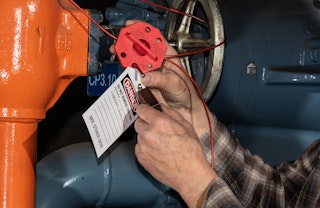
Give maintenance workers a clear six-step lockout/tagout routine, from identifying hazardous energy to verifying isolation before any work begins.


Made in the U.S.A.
© Copyright 2026