
Make workplace requirements clearer through clear Electrical Safety: Arc Flash Prevention instruction on arc flash hazards and causal factors.
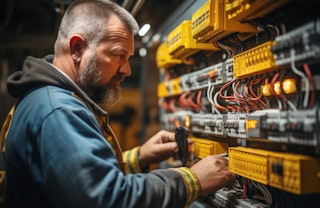
Focused on real-world application, Electrical Safety: Arc Flash Prevention turns core concepts into clear actions learners can use at work. Key outcomes include the ability to spot arc flash hazards and causal factors, explain the latest 2024 NFPA 70E guidelines and expectations, and describe conduct the relevant Electric Shock Risk and Arc Flash Risk assessments. The material also helps learners implement approach boundaries and safety measures around live equipment. Practical examples connect the subject to routine tasks, expected procedures, and decisions employees may need to make on the job. Learners finish with a clearer understanding of what to look for, how to respond, and when to raise a concern or seek additional guidance.
Arc flash training is needed by electricians, maintenance technicians, utility workers and anyone who works on or near energized electrical equipment. Facilities managers and safety officers who plan electrical work or approve energized work permits should also be trained. Unqualified workers need enough awareness to respect approach boundaries and warning labels.
NFPA 70E, the Standard for Electrical Safety in the Workplace, is the main consensus standard for arc flash safety; its current edition is 2024. OSHA enforces electrical safety through 29 CFR 1910 Subpart S and its general duty requirements, and often looks to NFPA 70E for accepted arc flash practices.
NFPA 70E requires retraining in electrical safety-related work practices at intervals of no more than three years. Extra training is needed when a worker isn't following safe practices, when new equipment or technology is introduced, or when job duties change. Emergency response training, such as contact release, is required annually.
An arc flash boundary is the distance from exposed energized parts where a person could receive a second-degree burn if an arc flash occurs. Under NFPA 70E, it is the point where incident energy reaches 1.2 cal/cm2. Anyone working inside the arc flash boundary needs arc-rated PPE suited to the incident energy.
An arc flash happens when electric current jumps through the air between conductors or to ground. Common triggers include dropped tools, loose connections, dust or corrosion, damaged insulation and improper work on live equipment. The blast produces intense heat, light and pressure that can cause severe burns, hearing loss and blindness.
Schedule a demo with one of our reps
Our extensive Learning Management System allows you to dispatch knowledge and required certificates to teams across your site portfolio.
Our platform caters to all learning styles and scenarios, ensuring effective knowledge retention.
Take control of the learning experience with our configurable class structure. Tailor the training journey to match your organizational needs.
Deliver targeted safety training regimens at every level, putting safety directly into the hands of your workforce.


Deliver more than 400 online safety courses as well as your own training with the SafetyAmp learning management system.
Easily enroll employees into training courses, whether they're in a classroom or taken online - then visualize training history and compliance across multiple locations.
SCORM-compatible
Library of 400+ courses from partner training providers
Create online training courses
Quickly view employee training history
Schedule classroom training sessions
Manage training renewals
Eliminate lost certificates
Built-in reports for training compliance

Other Courses

Build confidence for critical moments through clear Hot Work Safety: Welding, Cutting, and Brazing instruction on frequent hazards associated with welding, cutting, and brazing.

Make workplace requirements clearer. Get a practical overview of spaces using OSHA’s three-pillar criteria for bodily entry in Confined Spaces: Acceptable Entry Conditions.

Give maintenance workers a clear six-step lockout/tagout routine, from identifying hazardous energy to verifying isolation before any work begins.


Made in the U.S.A.
© Copyright 2026