
Learn safe practices for handling cryogenics and compressed gases. Protect yourself and others from potential hazards.
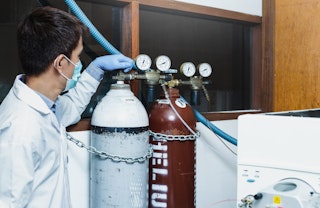
Cryogenics and compressed gas safety is a critical part of any university’s safety program. Almost 200 different types of gases can be contained in gas cylinders. Cryogenic gases are liquefied gases that are kept in their liquid state at very low temperatures and high pressures. This program covers the hazards, types of gases with emphasis on safety.Topics covered in this safety video include:hazards to consider, asphyxiation, fire and explosion, corrosive gases, chemical poisoning, materials for cryogenics, personal protective equipment (PPE), storage of cryogenics, liquid oxygen hazards, liquid nitrogen hazards, handling cylinders, leak detection, identification, cryogenics and gas cylinder storage, working with cylinders, cold burns and frostbite, first aid, cylinder piping and manifold safety, and training.
Cryogenics and compressed gas safety training is for anyone who fills, transfers or works near cryogenic liquids or high-pressure cylinders. Examples include lab researchers, hospital staff, welders and manufacturing workers who use liquid nitrogen, liquid oxygen or argon. The 30-minute course is available in English.
OSHA's compressed gas rule, 29 CFR 1910.101, covers cylinder inspection, handling and storage. Because cryogens cause cold burns and eye injuries, employers must assess hazards and provide eye, face and hand protection under 1910.132 through 1910.138. Hazard Communication, 1910.1200, governs labels and safety data sheets for these gases.
Cryogenic liquids are gases cooled into liquid form at extreme cold; liquid nitrogen boils at about -320°F. A small spill turns into a large volume of gas. That adds cold-contact injuries, rapid pressure buildup and oxygen displacement to normal cylinder hazards. Ice can also block valves and trap pressure.
Handling liquid nitrogen and other cryogens calls for a full face shield over safety goggles, loose-fitting insulated or leather gloves, and long sleeves. Wear cuffless pants outside the shoes so a spill can't pool against skin. Remove rings and watches, which can trap the liquid and freeze skin underneath.
Liquid nitrogen is an asphyxiation hazard because it boils into a large volume of gas that pushes oxygen out of the air. Nitrogen has no color or smell, so workers get no warning. Use oxygen monitors in enclosed rooms, and stay out of areas after a large release until oxygen levels are confirmed safe.
Schedule a demo with one of our reps
Our extensive Learning Management System allows you to dispatch knowledge and required certificates to teams across your site portfolio.
Our platform caters to all learning styles and scenarios, ensuring effective knowledge retention.
Take control of the learning experience with our configurable class structure. Tailor the training journey to match your organizational needs.
Deliver targeted safety training regimens at every level, putting safety directly into the hands of your workforce.


Deliver more than 400 online safety courses as well as your own training with the SafetyAmp learning management system.
Easily enroll employees into training courses, whether they're in a classroom or taken online - then visualize training history and compliance across multiple locations.
SCORM-compatible
Library of 400+ courses from partner training providers
Create online training courses
Quickly view employee training history
Schedule classroom training sessions
Manage training renewals
Eliminate lost certificates
Built-in reports for training compliance

Other Courses
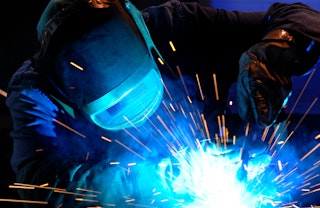
Build confidence for critical moments through clear Hot Work Safety: Welding, Cutting, and Brazing instruction on frequent hazards associated with welding, cutting, and brazing.

Make workplace requirements clearer. Get a practical overview of spaces using OSHA’s three-pillar criteria for bodily entry in Confined Spaces: Acceptable Entry Conditions.
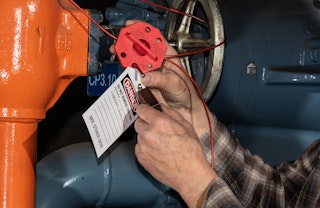
Give maintenance workers a clear six-step lockout/tagout routine, from identifying hazardous energy to verifying isolation before any work begins.


Made in the U.S.A.
© Copyright 2026