
Strengthen day-to-day performance with COVID-19: Staying Safe at Work for Employers training focused on COVID-19 guidelines for the workplace.
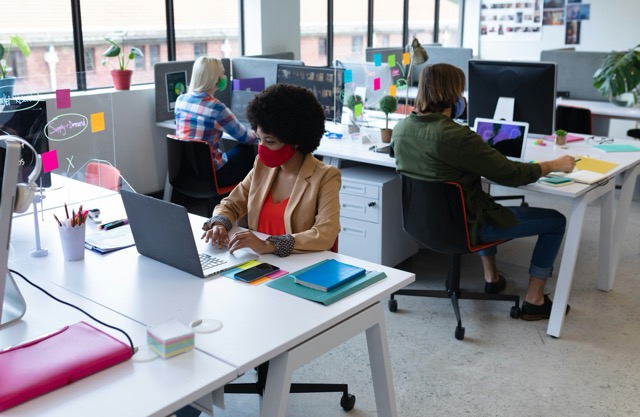
COVID-19: Staying Safe at Work for Employers gives learners a practical foundation for making safer, more informed decisions. Key outcomes include the ability to describe the reason and essential concepts of covid-19: staying safe at work for employers, spot common risks and responsibilities related to covid-19: staying safe at work for employers, and use the training guidance during routine work. The material also helps learners respond appropriately when questions or unsafe conditions arise. Practical examples connect the subject to routine tasks, expected procedures, and decisions employees may need to make on the job. Learners finish with a clearer understanding of what to look for, how to respond, and when to raise a concern or seek additional guidance.
Employers, supervisors and frontline employees who share workspaces, equipment or customer contact benefit from COVID-19 workplace safety training. It suits factory floors, warehouses, offices and service settings. The 21-minute English video covers how the virus spreads, common symptoms, PPE, distancing, hygiene, and cleaning and disinfecting work areas.
OSHA has no permanent COVID-19 standard for most workplaces. Employers still have duties under the OSH Act General Duty Clause, the PPE standard (29 CFR 1910.132) and respiratory protection (29 CFR 1910.134). Work-related cases may also be recordable under 29 CFR Part 1904. COVID-19 workplace training supports guidance from OSHA and the CDC.
COVID-19 spreads in the workplace mainly through respiratory droplets and small airborne particles from infected people. Risk is highest in close contact and in poorly ventilated areas. Touching contaminated surfaces and then the face is a less common route. Shared break rooms, crowded entrances and shared tools are typical trouble spots.
When an employee tests positive for COVID-19, the employer should have the worker stay home and follow current public health isolation guidance. Clean and disinfect the areas the person used. Inform coworkers who may have been exposed without naming the employee, and check whether the case is recordable.
Some COVID-19 workplace guidance from 2020 has changed, so employers should check current CDC and state health department recommendations. Core practices such as hand hygiene, staying home when sick, good ventilation and routine cleaning remain sound. Use COVID-19 training as a foundation and update local procedures as public health advice evolves.
Schedule a demo with one of our reps
Our extensive Learning Management System allows you to dispatch knowledge and required certificates to teams across your site portfolio.
Our platform caters to all learning styles and scenarios, ensuring effective knowledge retention.
Take control of the learning experience with our configurable class structure. Tailor the training journey to match your organizational needs.
Deliver targeted safety training regimens at every level, putting safety directly into the hands of your workforce.


Deliver more than 400 online safety courses as well as your own training with the SafetyAmp learning management system.
Easily enroll employees into training courses, whether they're in a classroom or taken online - then visualize training history and compliance across multiple locations.
SCORM-compatible
Library of 400+ courses from partner training providers
Create online training courses
Quickly view employee training history
Schedule classroom training sessions
Manage training renewals
Eliminate lost certificates
Built-in reports for training compliance

Other Courses

Build confidence for critical moments through clear Hot Work Safety: Welding, Cutting, and Brazing instruction on frequent hazards associated with welding, cutting, and brazing.

Make workplace requirements clearer. Get a practical overview of spaces using OSHA’s three-pillar criteria for bodily entry in Confined Spaces: Acceptable Entry Conditions.

Give maintenance workers a clear six-step lockout/tagout routine, from identifying hazardous energy to verifying isolation before any work begins.


Made in the U.S.A.
© Copyright 2026