
Teach crane and hoist users to inspect chains, hooks and slings daily and follow safe lifting habits that prevent dropped loads and injuries.
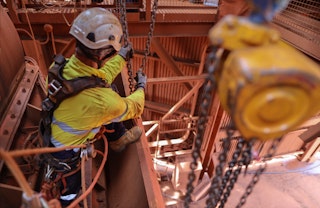
This comprehensive rigging safety training covers the proper selection, inspection, use, and maintenance of chains, cranes, hoists, and slings used in lifting and material handling operations. Rigging personnel, crane operators, and warehouse workers will learn how to safely handle heavy loads and prevent equipment failures that can lead to serious injuries. The program teaches participants to identify different types of rigging equipment including wire rope slings, chain slings, synthetic web slings, shackles, and hooks. Workers will learn to calculate load weights, determine working load limits (WLL), understand load angles and their effects on capacity, and select the appropriate rigging configuration for each lifting task. Topics include pre-use inspection procedures to identify damaged or worn equipment, proper attachment and balancing techniques, hand signals and communication during crane operations, avoiding common rigging hazards such as pinch points and struck-by incidents, safe storage and maintenance practices, and compliance with OSHA and ASME rigging standards. This training ensures rigging operations are conducted safely and efficiently while protecting workers from crushing injuries, falls, and equipment failures.
Crane operators, riggers, maintenance mechanics and material handlers who lift loads with hoists, chains or slings need this safety training. So do workers who give signals or work near suspended loads in fabrication shops, warehouses and plants. The 11-minute video is available in English and Spanish.
In general industry, OSHA's 29 CFR 1910.179 covers overhead and gantry cranes. Standard 1910.184 covers alloy steel chain, wire rope, metal mesh and synthetic slings. Construction work falls under 1926 Subpart CC for cranes and 1926.251 for rigging equipment. These rules require regular inspection and removal of damaged equipment.
OSHA requires a competent person to inspect each lifting sling and its fittings every day before use. Alloy steel chain slings also need a thorough periodic inspection at least once every 12 months, with records kept. Remove any sling showing cracks, stretched links, cuts, burns or heat damage.
Crane hooks that are cracked, bent, twisted or opened beyond limits must be removed from service. Safety latches should work and close fully. Seat each load in the bowl of the hook, never on the tip. Never side-load a hook or let a sling slip past the latch.
Workers stay safe around suspended loads by never standing or walking underneath them and keeping hands out of pinch points as slings tighten. Use tag lines to control swinging loads. Follow one designated signal person, keep loads low while traveling, and stop if the hoist or rigging looks wrong.
Schedule a demo with one of our reps
Our extensive Learning Management System allows you to dispatch knowledge and required certificates to teams across your site portfolio.
Our platform caters to all learning styles and scenarios, ensuring effective knowledge retention.
Take control of the learning experience with our configurable class structure. Tailor the training journey to match your organizational needs.
Deliver targeted safety training regimens at every level, putting safety directly into the hands of your workforce.


Deliver more than 400 online safety courses as well as your own training with the SafetyAmp learning management system.
Easily enroll employees into training courses, whether they're in a classroom or taken online - then visualize training history and compliance across multiple locations.
SCORM-compatible
Library of 400+ courses from partner training providers
Create online training courses
Quickly view employee training history
Schedule classroom training sessions
Manage training renewals
Eliminate lost certificates
Built-in reports for training compliance

Other Courses

Build confidence for critical moments through clear Hot Work Safety: Welding, Cutting, and Brazing instruction on frequent hazards associated with welding, cutting, and brazing.

Make workplace requirements clearer. Get a practical overview of spaces using OSHA’s three-pillar criteria for bodily entry in Confined Spaces: Acceptable Entry Conditions.

Give maintenance workers a clear six-step lockout/tagout routine, from identifying hazardous energy to verifying isolation before any work begins.


Made in the U.S.A.
© Copyright 2026