
Show employees what happens to unbelted occupants in a crash, why common excuses for skipping the belt fail and how to wear a seat belt correctly.
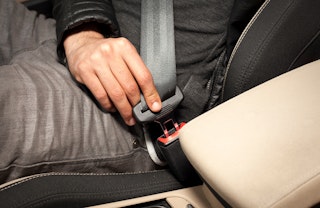
This impactful safety training features C. Harley's powerful presentation "How Far Can You Fly?" which uses real-world crash data and dramatic demonstrations to illustrate the life-saving importance of seat belt use. Drivers, fleet operators, and transportation workers will gain a compelling understanding of why seat belts are the single most effective safety device for preventing death and serious injury in vehicle crashes. The program presents statistical evidence showing that seat belts reduce the risk of fatal injury by 45% for front-seat passengers and by 60% for light truck occupants. Participants will see demonstrations of crash forces, understand how unbelted occupants become projectiles during collisions, and learn how seat belts work with airbags to provide maximum protection. Topics include proper seat belt positioning and adjustment, laws and regulations requiring seat belt use, consequences of non-compliance both legal and physical, protecting children with appropriate restraint systems, overcoming common excuses for not wearing seat belts, and building a company culture where 100% seat belt use is expected and enforced. This training program has proven effective at increasing seat belt compliance rates and reducing motor vehicle fatalities in workplace fleets.
Seat belt safety training is valuable for any employee who drives or rides in a vehicle for work. That includes fleet, delivery and sales drivers and field technicians. It also reaches commuters and parents, since the program covers child safety seats. The 24-minute video, "How Far Can You Fly?", is in English.
Commercial motor vehicle drivers must wear seat belts under federal rule 49 CFR 392.16. Nearly every state also has a seat belt law for adults, though enforcement rules differ. Many employers add a written policy requiring belts for anyone in a company vehicle or driving on company business.
In a crash, the vehicle stops but unbelted occupants keep moving at the same speed. They strike the dashboard, windshield or another person, or are thrown out. Seat belts spread crash forces across the strong bones of the pelvis and chest and keep occupants in place.
A seat belt should be worn with the lap belt snug and low across the hips, not the stomach. The shoulder belt should cross the middle of the chest and collarbone, away from the neck. Never tuck the shoulder belt under an arm or behind the back.
Choose a child car seat that fits the child's age, height and weight, and keep children rear-facing as long as the seat allows. Move to a forward-facing seat, then a booster, as they grow. Guidelines have changed since 2006, so follow current NHTSA advice and the manufacturer's limits.
Schedule a demo with one of our reps
Our extensive Learning Management System allows you to dispatch knowledge and required certificates to teams across your site portfolio.
Our platform caters to all learning styles and scenarios, ensuring effective knowledge retention.
Take control of the learning experience with our configurable class structure. Tailor the training journey to match your organizational needs.
Deliver targeted safety training regimens at every level, putting safety directly into the hands of your workforce.


Deliver more than 400 online safety courses as well as your own training with the SafetyAmp learning management system.
Easily enroll employees into training courses, whether they're in a classroom or taken online - then visualize training history and compliance across multiple locations.
SCORM-compatible
Library of 400+ courses from partner training providers
Create online training courses
Quickly view employee training history
Schedule classroom training sessions
Manage training renewals
Eliminate lost certificates
Built-in reports for training compliance

Other Courses

Build confidence for critical moments through clear Hot Work Safety: Welding, Cutting, and Brazing instruction on frequent hazards associated with welding, cutting, and brazing.

Make workplace requirements clearer. Get a practical overview of spaces using OSHA’s three-pillar criteria for bodily entry in Confined Spaces: Acceptable Entry Conditions.

Give maintenance workers a clear six-step lockout/tagout routine, from identifying hazardous energy to verifying isolation before any work begins.


Made in the U.S.A.
© Copyright 2026