
Protect your team with Accident Causes And Prevention (Janitorial) training focused on accident causes and prevention in the janitorial industry.
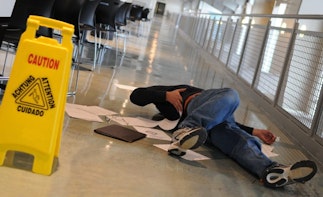
Accident Causes And Prevention (Janitorial) prepares employees to recognize relevant risks, responsibilities, and safe work expectations. Key outcomes include the ability to spot and prevent janitorial accidents, describe safe work environment practices, and increase hazard awareness in janitorial tasks. The material also helps learners prevent empower employees for accident. Practical examples connect the subject to routine tasks, expected procedures, and decisions employees may need to make on the job. Learners finish with a clearer understanding of what to look for, how to respond, and when to raise a concern or seek additional guidance.
Janitorial safety training is for custodians, janitors, housekeepers, building maintenance workers, and contract cleaning crews in offices, schools, plants, and healthcare facilities. Supervisors of cleaning staff also benefit, since they set work practices and supply equipment. The 10-minute video is available in English and Spanish and focuses on preventing common janitorial accidents.
Janitorial work falls under several OSHA general industry standards. Hazard Communication, 29 CFR 1910.1200, covers cleaning chemicals, labels, and safety data sheets. Walking-working surfaces rules in 29 CFR 1910 Subpart D address slips, trips, and falls. Under 29 CFR 1910.132, employers must assess PPE needs for tasks such as chemical handling.
The most common janitorial injuries are slips, trips, and falls on wet or cluttered floors. Lifting, mopping, and pushing carts cause sprains and strains. Custodians also suffer chemical burns and eye injuries from cleaning agents, plus cuts from broken glass or sharp objects hidden in trash bags.
No, mixing cleaning chemicals is never safe unless the label specifically directs it. Bleach combined with ammonia releases toxic chloramine vapors, and bleach mixed with acidic cleaners releases chlorine gas. Custodians should use one cleaning product at a time, read labels and safety data sheets, and work with good ventilation.
Custodians can prevent slips on wet floors by placing wet floor signs before cleaning and mopping one section at a time. Leave a dry path for foot traffic. Wear slip-resistant footwear, clean up spills promptly, and remove signs once floors are dry so the warnings stay meaningful to building occupants.
Schedule a demo with one of our reps
Our extensive Learning Management System allows you to dispatch knowledge and required certificates to teams across your site portfolio.
Our platform caters to all learning styles and scenarios, ensuring effective knowledge retention.
Take control of the learning experience with our configurable class structure. Tailor the training journey to match your organizational needs.
Deliver targeted safety training regimens at every level, putting safety directly into the hands of your workforce.


Deliver more than 400 online safety courses as well as your own training with the SafetyAmp learning management system.
Easily enroll employees into training courses, whether they're in a classroom or taken online - then visualize training history and compliance across multiple locations.
SCORM-compatible
Library of 400+ courses from partner training providers
Create online training courses
Quickly view employee training history
Schedule classroom training sessions
Manage training renewals
Eliminate lost certificates
Built-in reports for training compliance

Other Courses

Build confidence for critical moments through clear Hot Work Safety: Welding, Cutting, and Brazing instruction on frequent hazards associated with welding, cutting, and brazing.

Make workplace requirements clearer. Get a practical overview of spaces using OSHA’s three-pillar criteria for bodily entry in Confined Spaces: Acceptable Entry Conditions.

Give maintenance workers a clear six-step lockout/tagout routine, from identifying hazardous energy to verifying isolation before any work begins.


Made in the U.S.A.
© Copyright 2026